the Story
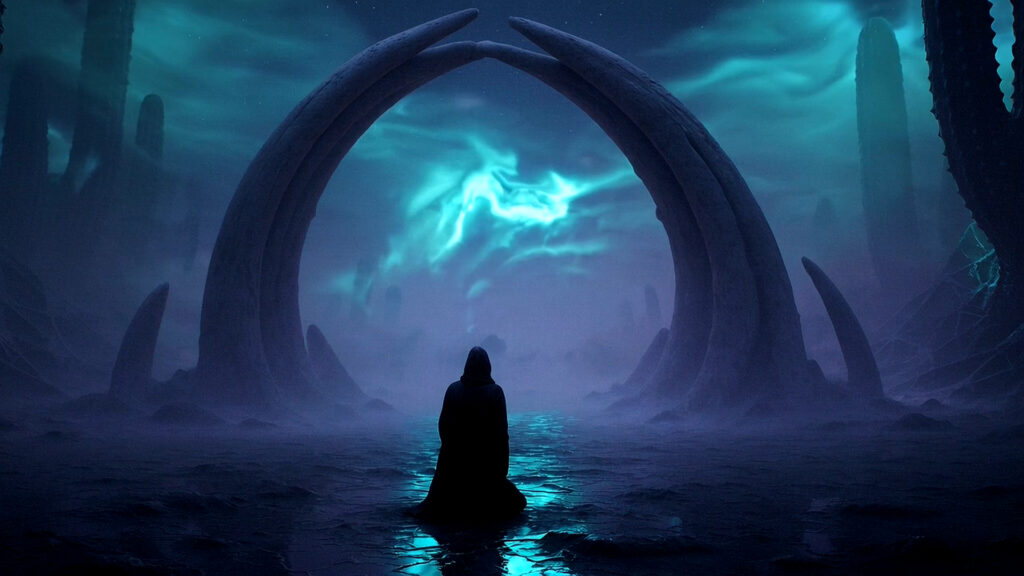
The plain was made of black salt, a horizon of matte crystals that swallowed reflections instead of returning them. Above it hung a sky the color of cooled iron. Nothing moved, not the thin grasses fossilized in place, not the distant ribs of petrified cactus, not the oval shadows that pooled where there should have been light. The air felt thick—like a held note, like a thought someone forgot to finish.
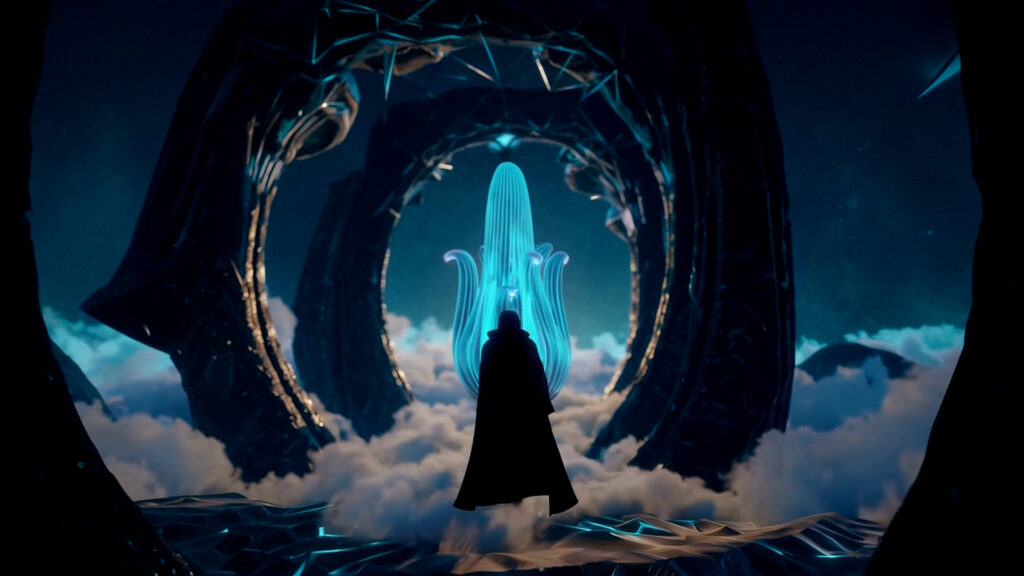
Out of that heldness, a figure stepped.
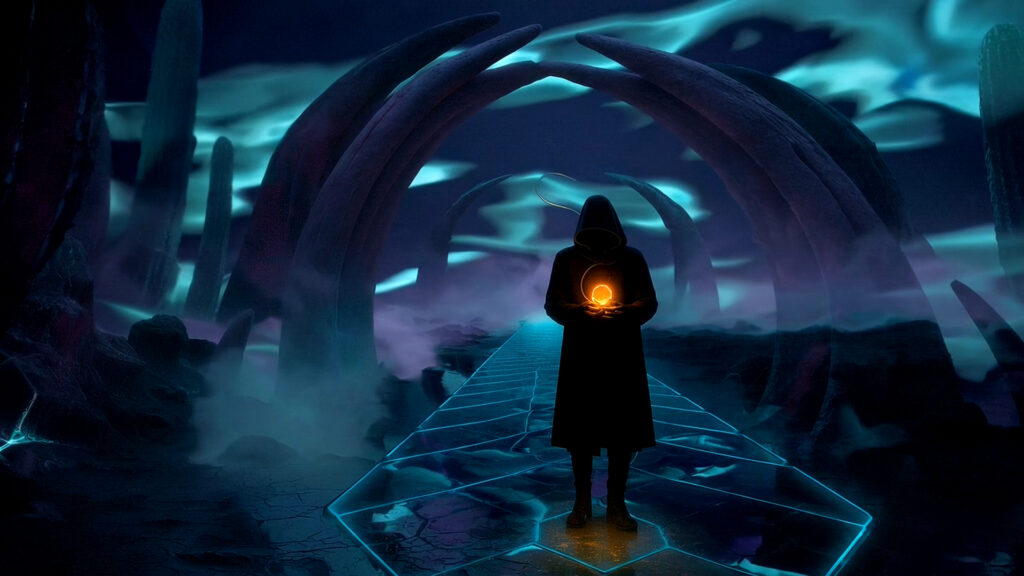
They were not armored or robed. They carried no tools, only a glass seed cupped in both hands, small enough to hide in a fist, heavy enough to pull the shoulders down. The seed was not luminous, but light noticed it; beams bent when it passed. The traveler steadied their breath until it matched the inaudible pulse threading through the ground. When they looked up, the horizon turned by a fraction, just enough to show that all horizons here were part of a wheel.
The wheel’s center was nowhere and everywhere, but its rim—the path—ran straight ahead. The traveler started walking.
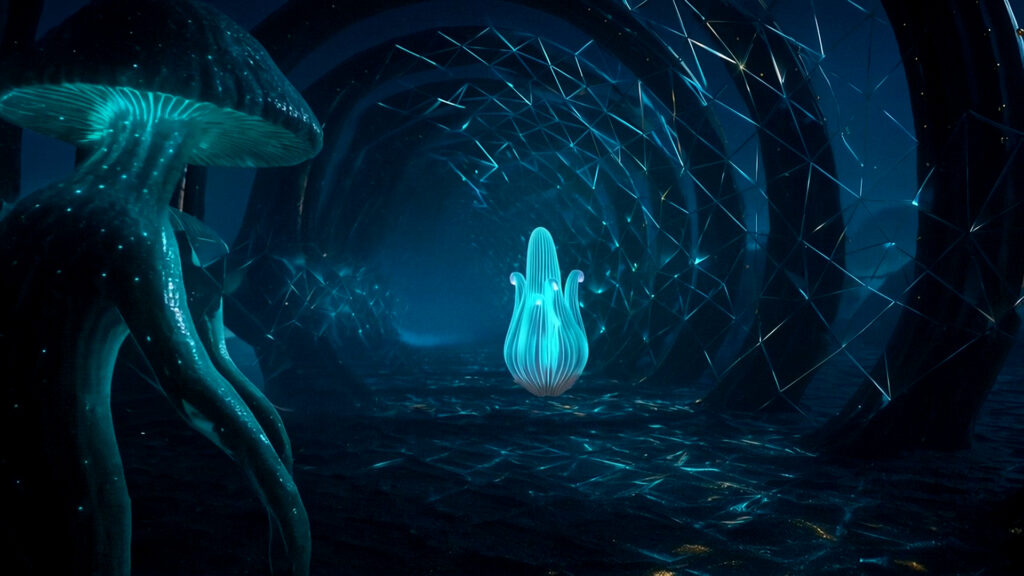
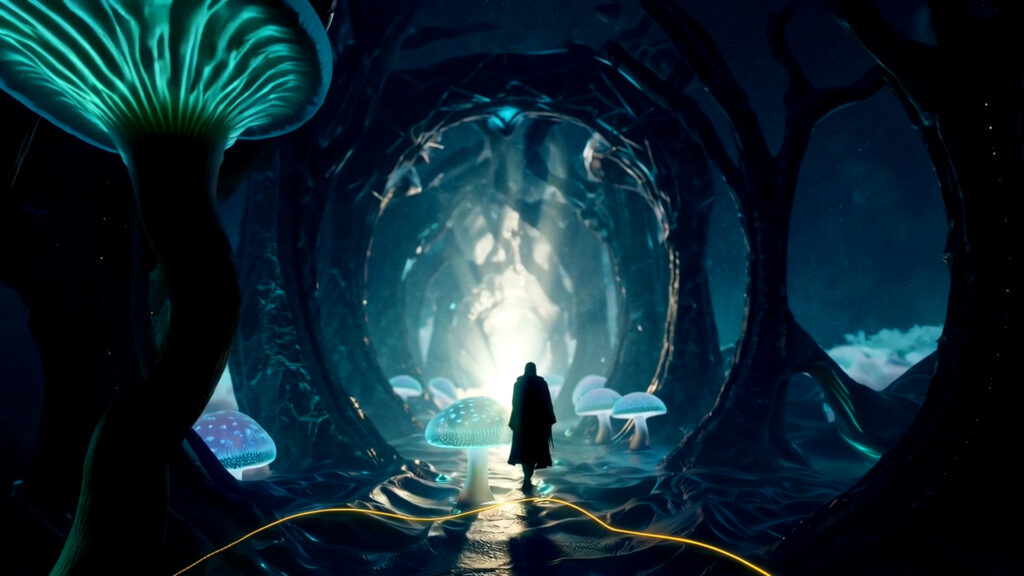
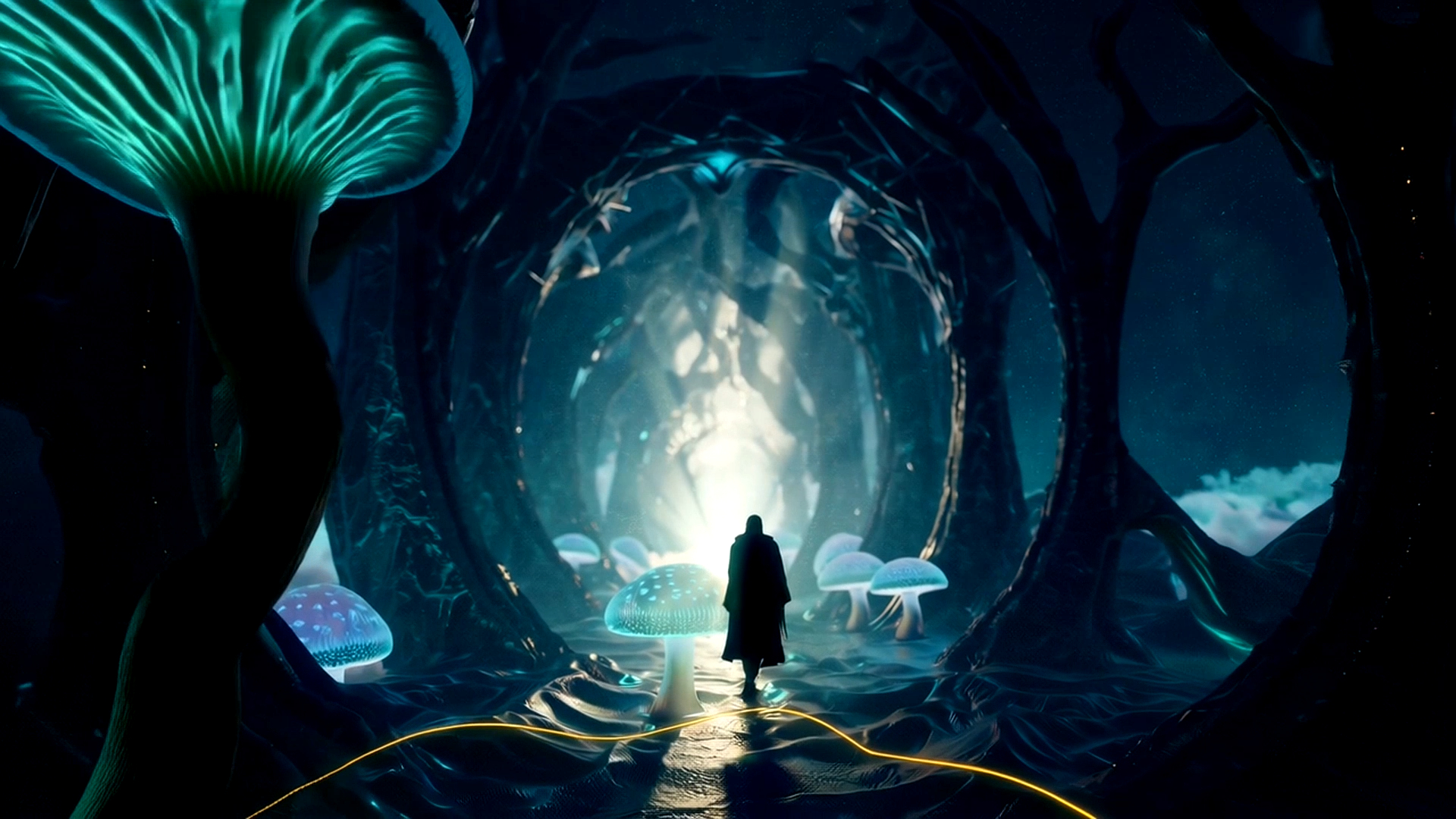
Out past the fifth step, the salt exhaled spores that did not rise or fall. They hung, counting each other, arranging themselves into a body: a lank, cathedral-shouldered mushroom being with gills inscribed in teal. Its shadow formed before its cap; then its stem curled up from the shadow’s edge, a reversed sprout. The gills flexed, and stenciled onto the air between them appeared a silent string of equations shaped like vines.
The traveler paused without fear. The equations were invitations.
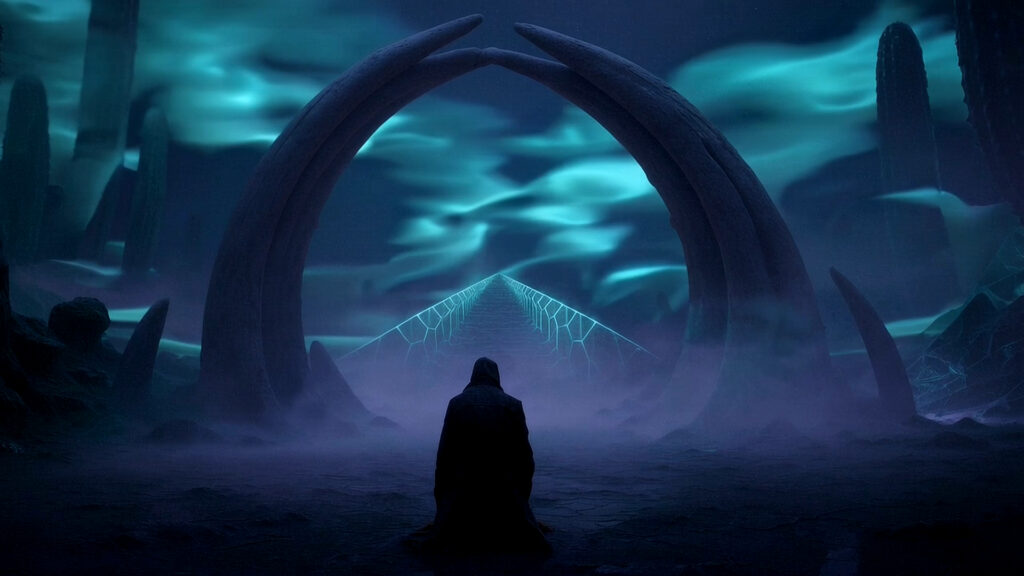
The mushroom lifted its arm. Halfway through the gesture, the arm became a cactus rib, green lacquer with glints of trapped suns. The rib arched overhead and, with a soft click of geometry, multiplied into a corridor: rib upon rib, an arcade of living anatomy, each curve fitted to the next by joints that whispered when they turned. Salt slipped out of salt, forming steps that did not look like steps until the traveler placed a foot on them and the ground agreed.
A corridor of ribs and spores opened toward a darkness that was not night, and the traveler crossed the threshold.
Beneath the ribs, the air acquired weight. Droplets formed on the cactus skin and beaded, each bead holding a world full of tiny weather. Where the beads grazed one another, prisms were born—micro-faceted insects that hummed without sound and flew in quivering constellations. Columnar forms extruded from the salt like glass trees, branches interlocking in a scaffold of perfect errors. Between branches, filaments stretched into a lattice, a graph of choices the traveler hadn’t made yet.
In the prisms, the traveler’s reflection wore a dozen futures. In some, the seed had already been planted; in others, the seed was a piercing and the sky was stitched to their skin. In one, there was no traveler at all, only the seed rolling like a planet where the ribs met the plain.
The traveler walked through those possibilities. Each step bent the lattice by a degree and left it humming. The humming thickened the air until it could be sculpted by a breath. With a slow exhale, the traveler pressed a path, and the prisms obeyed. They formed an arch after arch leading toward a distant brightness like the memory of a door.
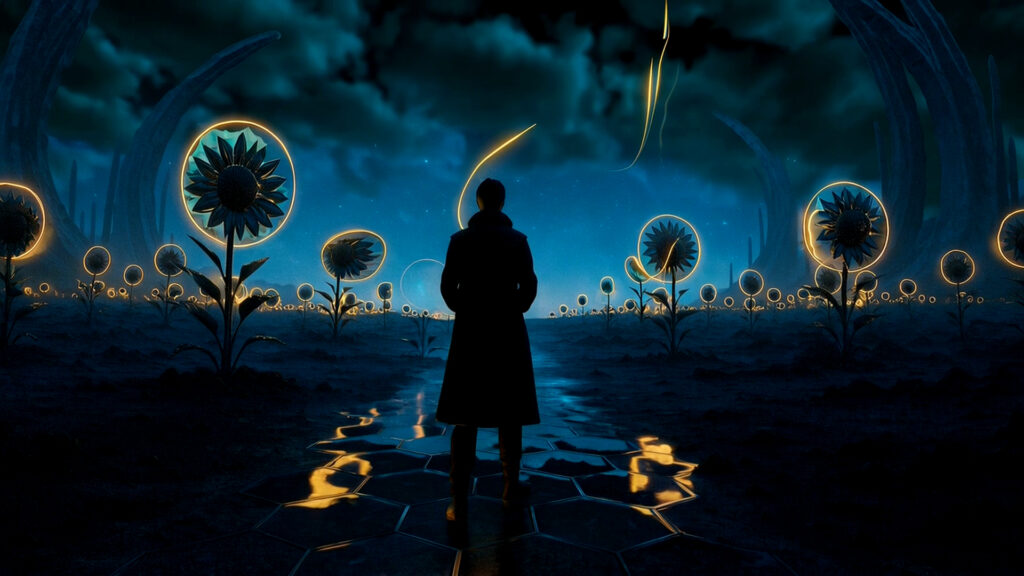
Between the ribs outside the corridor, the land had rearranged into a field of sunflowers made from obsidian, each petal rimmed in honey-colored halos. They turned in perfect sober unison to face the corridor and watch. As the traveler approached the brightness, the obsidian flowers let loose a fine rain of metal seeds that tinked against the salt and sank without a mark.
The brightness at the corridor’s end was not light but speed. A tunnel leaned forward into motion and snapped everything else along with it.
The traveler stepped into the lean and the world became a vector.
There are kinds of movement that feel like being stretched without tearing, like a glass rod drawn into a filament. The tunnel did that. Prism-joints flipped with an oily smoothness; the ribs elongated into lines; the spores became a silver dust stream. Gravity, which had been a polite host until now, excused itself from the conversation. The traveler’s hands, tight around the seed, relaxed not by choice but by inevitability; the seed knew this part better than the traveler did.
Everything folded outward. Planes lifted into kaleidoscope hinges and turned, revealing their insides engineered with sacred geometry—not the stern kind etched into temples, but the playful kind carved into shells. Motion found its cheer in repeating patterns. Angles remixed themselves. The traveler glided on rails that were also ripples, riding through a museum of laws of nature arguing and making up.
Then the tunnel reached a place where speed refused to go.
A notch appeared in the sky, the size of a sleepless eye.
The tunnel twisted to aim for it. The traveler went with the twist and felt a tug in the seed—a reminder that the Protocol began at the seam and ended at the seam, but could only be carried out from below.
They reached for the notch and missed, as required.
Space folded in shyly, embarrassed by its own audacity. The speed put itself away, and the traveler dropped into the Hollow Basin.
Here, slowness had different laws. Distance dilated like a pupil; colors cooled toward steel, then toward violet, then toward smoke. The ribs sank into the salt until only their tips showed, like whale bones rising from a dry sea. The prisms fogged over. The lattice slackened into a web touched with dew and dust, too shy to carry. The sunflower field dimmed, their halos pulled inward, their obsidian petals angled low in grave attention.
The traveler stood in the Basin and forgot, then remembered, then forgot again, what the Protocol required.
The Basin was made for forgetting. It offered quiet indulged by the earth itself, a hush drawn from more ancient reservoirs than wind or water. The traveler felt their knees want to fold. The glass seed became the size of a moon, not in dimension but in duty. When the traveler held it higher, it did not lighten. When the traveler set it on the ground, the ground rose subtly to meet it as if to keep it off the dirt.
To leave the Basin, some names had to be set down.
The traveler opened their mouth and told the salt the names of the tools they had not brought, the names of homes they had not built, the names of faces they had not followed when they turned away. Each name loosened a thread in the web. The web tightened into a span. The span thickened into a bridge.
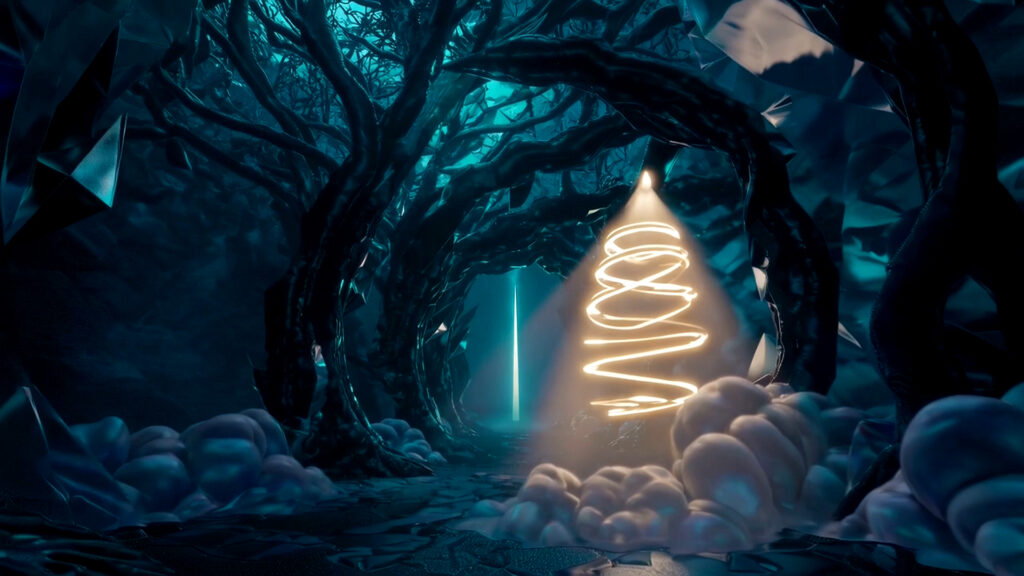
At the bridge’s midpoint, the traveler stopped and listened. Far beneath the Basin, something flowed. Not water—something denser, shinier, containing its own mirror. The traveler pressed thumb and forefinger against the seed. A filament unfurled from within it, finer than hair, warmer than breath. The filament curled with its own logic and set itself like a bit of handwriting across the traveler’s palm.
The name of the filament was gold.
The bridge released the traveler onto the Basin’s rim. The dim halos of the sunflowers extended, ever so slightly, toward the traveler—permission and expectation.
The traveler stepped forward.
On the far side of the Basin, the wind returned. It came from no direction and all directions, and carried amber dust that glowed faintly where it swirled, catching in eddies with a contented weight. The bones rose again into ribs; dew condensed into clear lenses lacquered along the cactus’ curves. The prisms woke, eager without being frantic. The seed in the traveler’s hands grew lighter now—not lighter like air, but lighter like a promise almost fulfilled.
The Mercury River revealed itself by soundlessness. It passed not far from the ribs, a band of liquid metal a few paces wide that could not be seen directly unless you looked at it out of the corner of an intention. When the traveler faced it, it vanished; when they looked toward the obsidian sunflowers, the river’s edge was visible as a continuous distortion—a bending of the world that ran in a line, smooth as a blade.
The traveler placed a foot into the nothing. It became something. The shin caught a coolness that wasn’t cold, a pressure that wasn’t weight. They took another step and both legs moved with a firmness that suggested the river wanted them to be well-balanced and would be insulted if they were not. The river took them politely.
Sunflowers turned to follow. Their halos extended outward into rings that rolled slowly along the ground, keeping pace. The rings brushed the river and spelled things with their rims, blooming glyphs and fading them. The cactus ribs kept a respectful distance, bowing their arches to allow passage. The mushroom’s gills, which had lingered as a notion at the edge of the ribs, fluttered like pages shuffled by a grateful librarian.
That was the crowd. That was all the company.
The river moved with purpose, and the purpose was not speed but alignment. Each curve brought sky, salt, ribs, sunflower, prism, and traveler into a more exact sympathy. The traveler adjusted their breathing to match. The gold filament in their palm softened and warmed until it could have been mistaken for an aspen hair in autumn light, if hair could hum.
Halfway along the river’s course, the Protocol presented its first formal step.
A tide in the mercury rose a fraction of a finger’s width and held, like a raised eyebrow. The traveler answered by raising the seed, not high, merely aligning it with the brow. The tide flattened. A second tide lifted behind it: a question framed by two lesser curves. The traveler traced a circle around the seed with the gold filament. The river accepted this with a delicate tilt that rearranged what the traveler thought of as “down.” The sunflowers complied with a synchronized nod. The ribs shivered their spines as if shrugging off dust, and were clean.
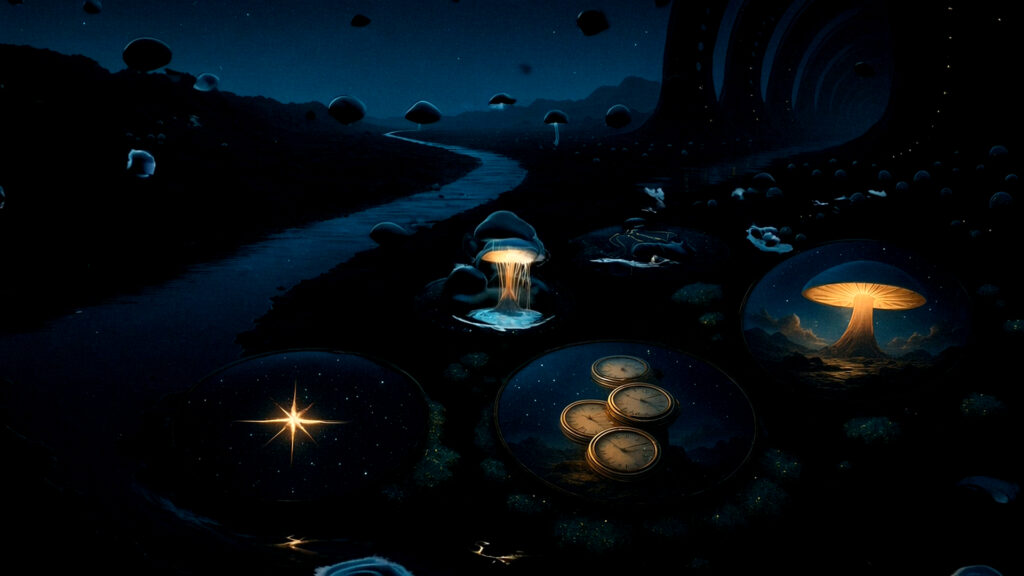
The river took a turn covered in mirror-lichen, each patch reflecting not the traveler but a nearby possibility: the seed as a star; the river as a road through a spine; the cactus as a stack of clocks; the mushroom as a lamp made of skies. The traveler did not look long at any one reflection. Some were kind invitations to stay. Others were polite warnings to keep moving. The river knew the difference and kept its surface unwrinkled.
Ahead, the seam that was not a notch now spanned the sky. It was not a wound, exactly. It was a boundary between two agreements about how to be a sky. The agreements had drifted too far apart to touch. The job was not to choose one agreement and abolish the other; the job was to sew them together so that both could remain themselves without tearing the horizon.
The traveler lifted the seed to the seam, and the river rose beneath them like a hand.
The gold filament unraveled on its own and asked for nothing but direction. The traveler offered it a path measured not in distance but in turns. The turns spiraled without crossing themselves. Each loop caught a different piece of sky-policy: the way light should bend when afraid of itself, the way clouds should forget their names and simply occur, the way night goes soft at the edges without apologizing. The traveler stitched those policies together into something that would not require negotiation every time a star decided to be seen.
As the filament moved, the world began to strobe. Not in harsh pulses, but in respectful cycles: mushroom to cactus to prism to gate and back, each transformation clean, the joints well-oiled. The traveler’s body flickered between being a silhouette of condensed breath and being a statue carved from melted mirrors and being an empty vessel that made a shape out of the absence inside it. The river tolerated these variations and kept the traveler upright.
The seam narrowed. Where it narrowed, wind returned from currently unknowable altitudes and carried with it the scent of cave smoke, quartz dust, fern pollen, and iron rain—materials from histories that never shared a room before. The gold filament sang in small tensions, more vibration than sound. Each stitch closed a question the world did not realize it had been asking since the first time light hesitated at the edge of a leaf.
The last loop would not set. It hovered like a coin spinning on its axis, waiting for an answer to the question all seams ask at least once: What if we stayed open?
The traveler did not answer with thought. They answered with an adjustment. They shifted their stance along the river by the width of a finger bone, turned the seed by a breath, and let the filament pass over their heart before it returned to the seam. The coin stilled. The loop fell into the right shape, which could not be named. The seam accepted the loop and learned it.
The sky closed in gratitude and did not bolt it.
The river let the traveler down with dignity and took itself away with the same.
After stitching, colors simplify. The obsidian sunflowers folded their halos and returned to studying the road. The ribs sank to a practical height, good for shade and echoes but not so grand they’d demand worship. The prisms set themselves into the air in a pattern that would make good sense to migrating birds. The mushroom being stood without taller-than-necessary aspirations and bowed not to the traveler but to the seed.
The seed had less weight now. The kind of weight it lost was a pressure the traveler hadn’t learned to notice until it was gone. They held the seed again and it behaved like a small, dense idea: significant, companionable, portable.
There was one more step.
The protocol did not say the traveler should plant the seed. It said: “Allow the seed to understand the ground.”
The traveler knelt and pressed the seed onto the salt. The salt remembered caves and offered the seed a catalog of resonant rooms. The seed remembered space and offered the salt a catalog of well-behaved vacuums. The exchange took the length of three heartbeats, which were not the traveler’s but belonged to the ground of this plain in centuries-long measure.
When the seed lifted away, it didn’t leave a hole. It left a tilt, so slight that only light would argue about it. The tilt adjusted how dawn would arrive for the next thousand mornings. The kind of morning that would happen more often here would be the kind that convinced people to drink water even when they weren’t thirsty. The kind of night that would follow would end more arguments than it started.
The traveler stood. The mushroom being stepped forward and bled spores that arranged themselves into a page. On the page was a diagram of the world as it had been, and the same world with one thread drawn through it. In the lower corner of the page, a hand had already written the word “Protocol” in a script so familiar that the traveler knew it was their own, done at some previous time from a slightly different angle.
They let the page dissolve into small, grateful shapes and scatter where they liked.
This desert, which had started with a plain of obedient salt, now had beneath it a river that had accepted its job. That was all the Protocol wanted.
The river curved once more near the traveler’s boot and stroked the dust from it. Then it sank. If you could have seen it through the ground, you would have watched it thread itself into a wider current, joining other rivers you couldn’t name, some made of glass, some of time, some of all the breaths you didn’t take and were glad you didn’t because they would have broken a silence the earth needed to keep.
The traveler walked until the ribs thinned into suggestion and the sunflowers scattered themselves across the horizon like notes written by a hand that had learned to trust the table it wrote upon. The sky, without seam, wore the color of iron softened by intention. Somewhere beyond the ribs, the mercury lifted and set according to rules it would never explain out loud, because rules are happier when they can be followed by intuition instead of interrogation.
Behind the traveler, the mushroom being reduced itself to a set of hints: a stain shaped like gills on the shadow of a rock, a rippled patch of air where spores practiced making sentences, a smell like rain that had studied minerals and passed the exam. Ahead of the traveler, the ground arranged the suggestion of a path. Not a promise—just a leaning. The traveler took it.
Night happened in a confidence the land had not felt in a long while. When the stars came, they arranged themselves according to the new tilt so they wouldn’t distract the people who would someday stand here from drinking water because it looked too pretty to touch. The wind brought the sound of lizards making choices and accepting consequences. Somewhere very far down, the mercury worked, its pressure evenly distributed across its arguments, its mirror turned toward itself so it wouldn’t be bothered.
There are people in the world who will tell you that a river should not be a protocol, that water and rules are poor neighbors, that flow and instruction make a quarrelsome marriage. They will be mostly right in places where rivers are water and do not include silver and sky. Here, on the black salt, the marriage was arranged by the land for the sake of the sky and the sky for the sake of the land. The river would remember to be a river. The protocol would remember to be a path, not a prison.
The traveler felt a tug in their hands. The seed had stopped tugging. The space where the tug had lived was now empty and available for other tugs of more ordinary kinds—hunger, curiosity, the desire to sleep against a warm rock with a coat pulled over the head. The traveler recognized those tugs as old friends and invited them to speak again in their older voices.
They walked until the salt grew friendlier, grading into sand with the sly confidence of a landscape that knows you will forgive it for being hard to cross because it is so good at teaching you to cross it. When they lay down, the ribs had moved a bit closer together to keep the wind from gossipping around them. The sunflowers angled their heads as if to check on the traveler and then turned to their night business.
The traveler dreamed not of the seam and not of the stitch and not of the gold filament that knew exactly where to go. They dreamed of water that does not wet and light that does not glare and paths that are not lines but long kindnesses. In the morning, when the first incline of daylight touched the new tilt and slid along it like a hand on a banister, the traveler woke with a small smile that would have looked at home on the face of a stone. They stretched and stood and felt the kind of fatigue that says: you were a useful animal yesterday; perhaps be one again today.
The Mercury River did not ask for a farewell. Protocols rarely require thanks; they are built to survive without applause. But the traveler looked anyway toward where the river ran, tilted their head in the smallest bow, and continued across the plain. There would be other seams in other skies. There would be other filaments, other ribs, other sunflowers behind whose glossy faces were gears humming patient laws. There would be other basins where the world asked: what if we rested here and did not go on?
They would rest. Then they would go on.
This was the gift the river had given: not instructions to follow, but rhythm without a metronome, a confidence that form could change without betrayal, that a desert could become a corridor and a corridor could become a tunnel and a tunnel could become a basin and a basin could become a river and a river could become a thread and a thread could become a world stitched together just enough to hold.
When night fell again, the sky kept its seam hidden not because it was ashamed but because it was healed. A healed thing does not insist on the story of its wound; it simply works. The traveler slept with both hands open, fingers slightly curved—as if still holding a small, heavy seed that had learned to understand the ground and no longer needed to be carried.
If you stand on that plain on a windless day, you might feel an invisible current pulling your attention toward wherever the horizon seems least interested in being straight. If you place your palm to the salt, you might sense a humming as gentle as a thought finishing itself. That will be the Mercury River at work, following the Protocol it wrote for itself when someone once came carrying a seed and turned their body by a breath to answer a stitchable question.
And if a mushroom shape leans from a shadow to watch you, and a cactus rib arranges its arch so your stride is forgiven for being mortal, and a sunflower brightens without light, and prisms hum politely around your head, it will not be because you have been chosen. It will be because the world enjoys remembering its own instructions. It will be because the seam is closed for now, and everything that once depended on it is relieved to depend on better ideas.
You can walk then. The protocol will not follow you. It will stay, working, as rivers work, policymaking not by decree but by repetition. It will travel under the salt where we cannot see, meeting other unseeable decisions, and together they will keep the sky from tearing when the stars decide to perform impossible kindnesses at incautious angles.
The traveler will be elsewhere by then, but somewhere—always somewhere—their hands will still be remembering the shape of a seed.
the Gallery