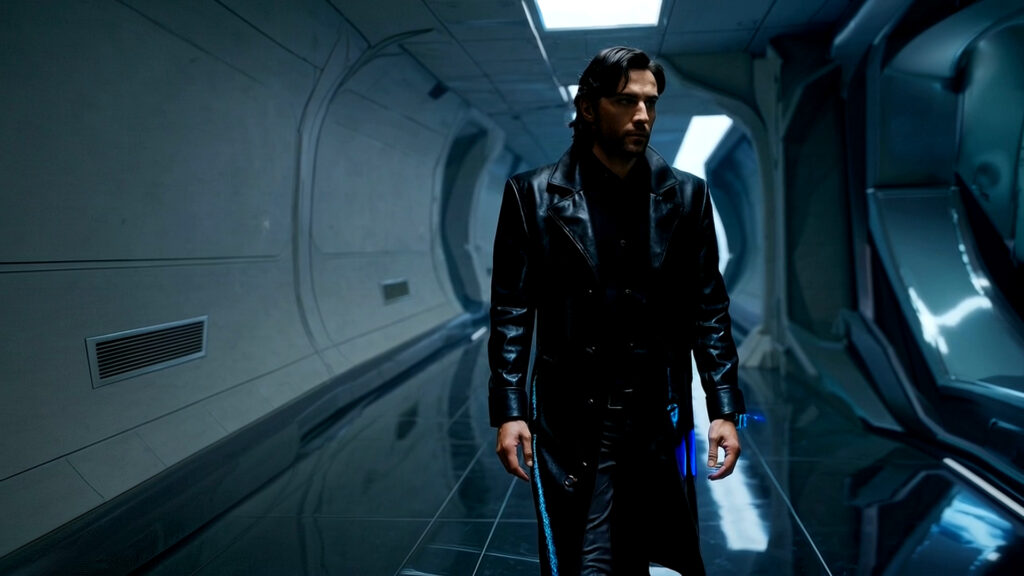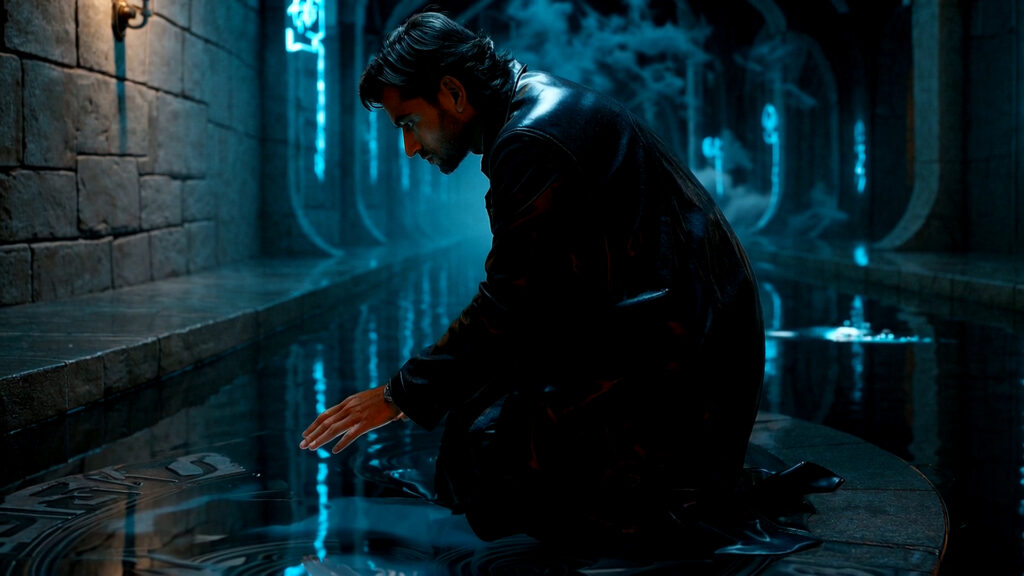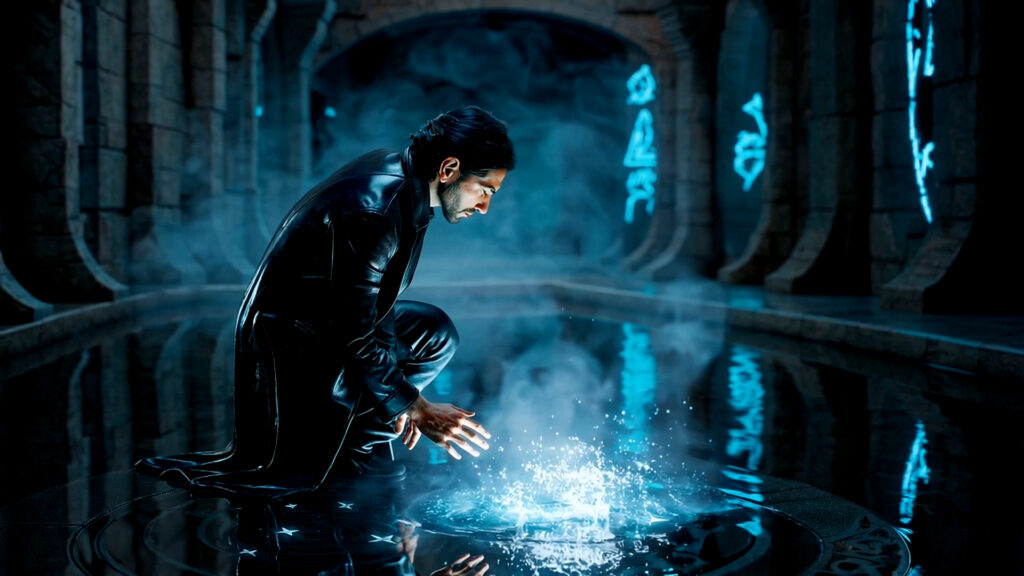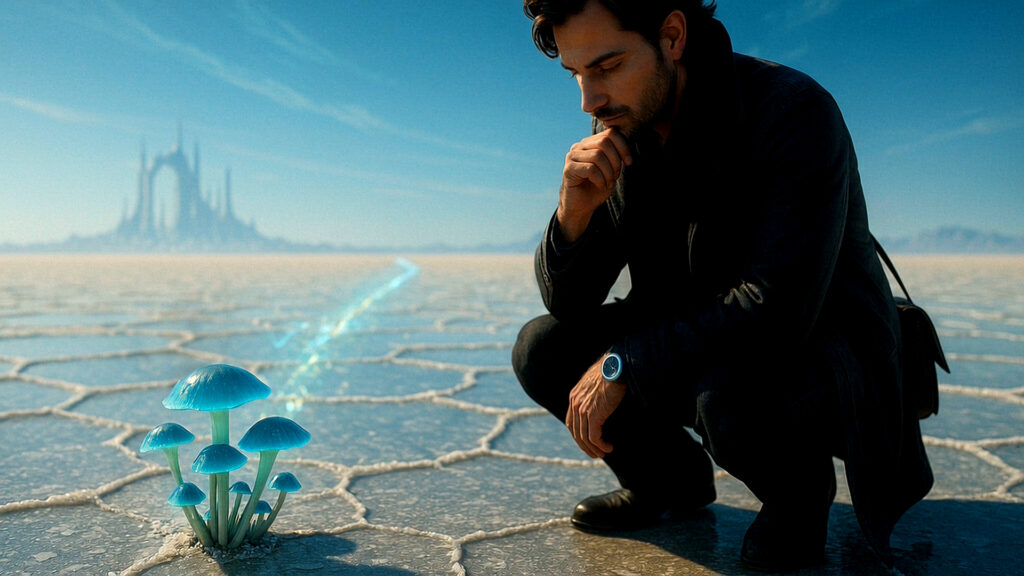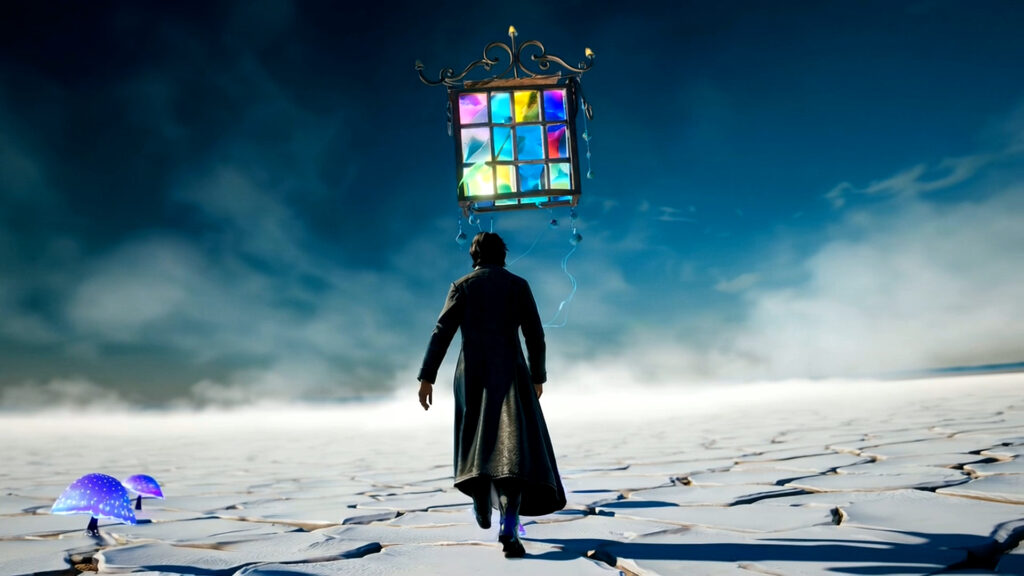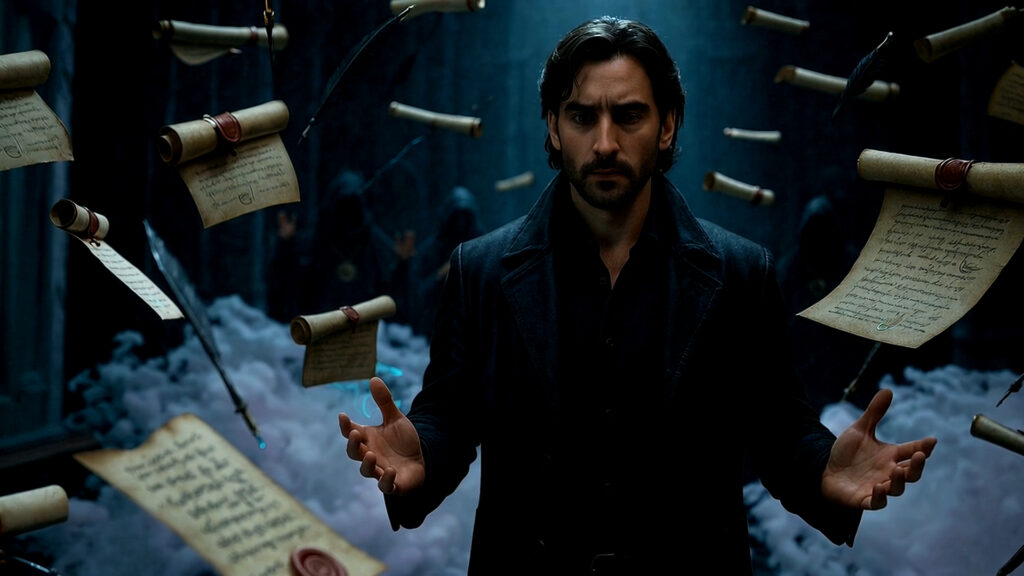
They call you Riftwalker because you learned a new way to keep a promise.
Before that, you were another night-shift body wandering fluorescent hallways that hummed even when the power was out, mopping the same square of floor because it was easier than believing the world wanted anything from you. Then the first door winked where there had never been a door—between an ice machine and a vending unit that sold nothing but grape soda—and the air on the other side wore a smell like rain rehearsing. You stepped through with the reflex of someone too tired to be frightened and discovered a geography that had been waiting for the exact shape of your footfall.
You learned the strange keys that coax reality’s seams to loosen: powders that fold time into soft pleats; cactus buttons that remember constellations older than law; mushrooms that breathe to each other under city pavement, trading gossip through hair-fine roots. You learned the weight of a message in your pocket when it’s more than paper—when it’s an embryo of possibility, warm with its own opinion. And you learned the rule that matters: doors open outward only if you have something to give. The world is not a charity; it is a barter.
Tonight, your phone chimes without lighting up. The text is only a hand-drawn spiral. That’s how they ask. You put on the coat with the lining you stitched yourself, the one that looks ordinary to the ordinary—thread the color of rainwater, buttons cut from a mirror that refuses to show strangers. You take the stairs. The stairwell lengthens. Stairs become corridor; concrete becomes linoleum that’s too clean to be honest. There’s the clock you never trust and vents that exhale lazy snow. Spores drift out and land on your sleeve. Under each one is a coordinate you won’t recall when you wake.
The message finds you the way messages always do: the corridor turns slightly wrong, like a book misprinted by an enthusiastic god, and a door stands where nothing stood five nights ago. You open it. Not because you believe yourself chosen—because you are practiced at saying yes before doubt can invent a reason to be clever.
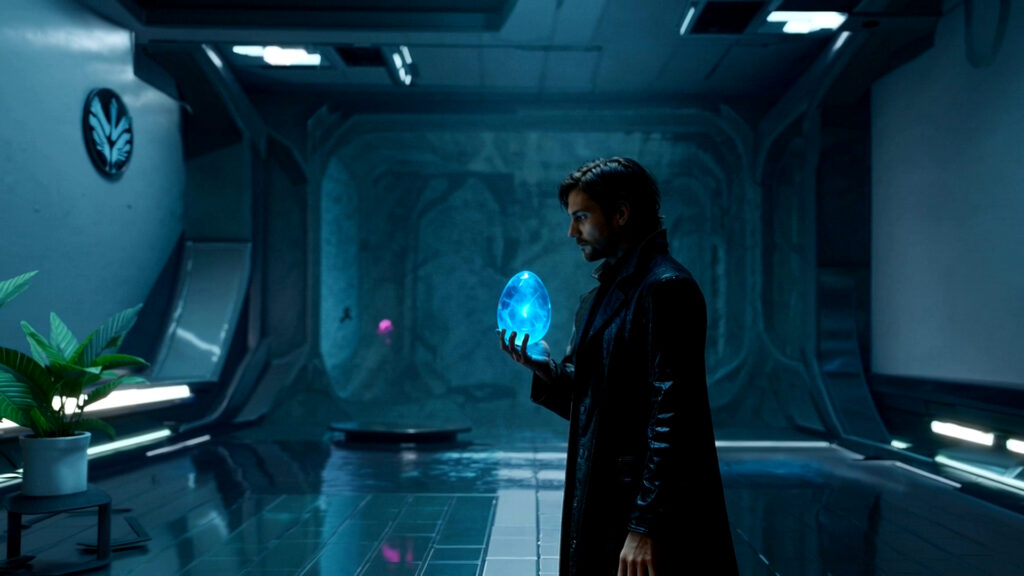
Inside is a room that refuses to be a room. The floor is the idea of floor. The walls keep changing their minds. At the center, on a table that only has three legs because it doesn’t need four, something beats in a rhythm that will not be named. A puff of air touches your hand: not breath, not wind. It is recognition. The message is no envelope. It is a palm-sized egg of warm blue glass, and when it touches your skin, your pulse revises itself to meet its tempo. A mark appears on your wrist, thin as spider silk, a ring that wasn’t there a second ago. The more you look at it, the more it looks back. “All right,” you say to nobody in particular. “I’ll carry you.”
You pocket the egg. The ring on your wrist tightens as if to remind the body how to be a vessel. The door behind you shuts with no sound, and the corridor beyond lurches under a new gravity. Hospital lighting brightens into a cleaner white that never belonged to hospitals; the floor glosses until it could be ice. Your reflection keeps a step behind you, a half-second lag like a friend trying to learn your gait. Your senses thicken, syruped, each movement underwater but precise. Ketamine calm arrives—not a fog but a cushion. You can hear the air’s slow heartbeat. You take the corner that didn’t exist yesterday and see where the linoleum buckles into stars.
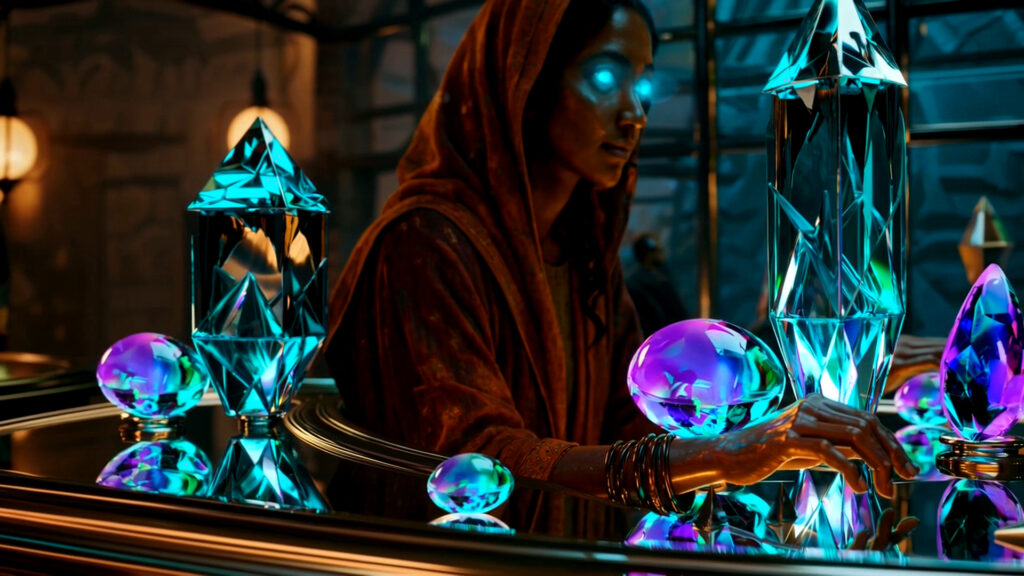
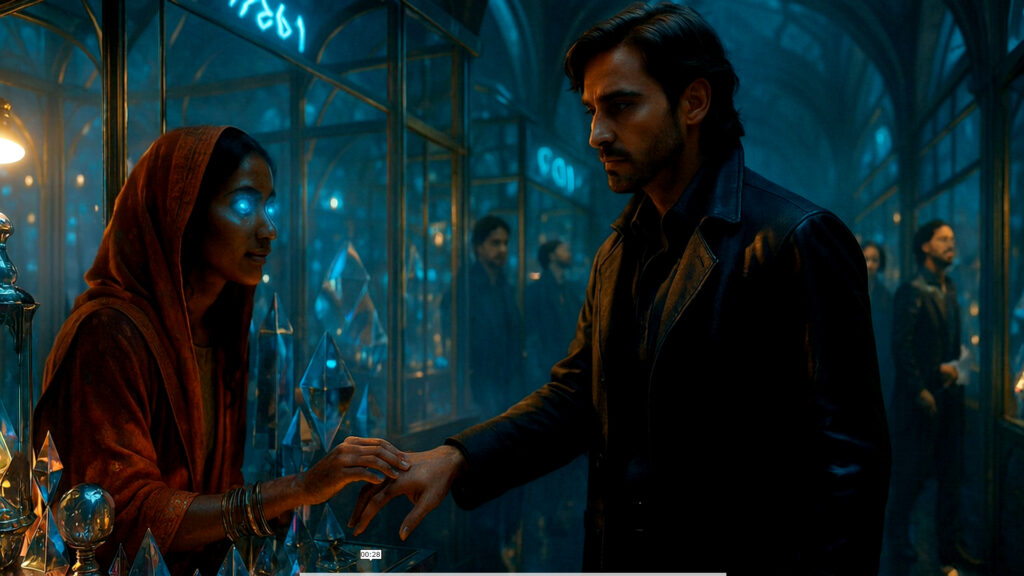
A market waits on the other side, except nobody sells anything they own. Shops are ribs of glass; windows are mirages trained to hold still. Reflections crowd in, a hundred versions of you making faces you hope you never make when you cannot see yourself. A woman with optic-fiber irises sets a thumb on your wrist where your new ring lives, and the ring warms like a compliment. “Left at the hinge,” she says, in a voice that folds into spirals and makes them feel inevitable. You know what she means. Two reflections disagree on whether your mouth is a wound or a door. You slip between disagreement and find the seam where the world can’t remember which side is front.
Silence claims you without the cruelty of isolation. You have crossed into a garden that is part greenhouse, part cathedral, and part theorem. Stems of transparent quartz hold bells of color; the bells ring without sound, and the air carries the idea of the notes instead. Insects zip in neon geometry, their bodies little prisms that extrude letters you don’t know how to read until you do. Your breath slows enough to count the tiny storms forming and dissolving in each lung. The message egg in your pocket grows lighter, as if reassured by pattern. Mescaline logic settles like stained glass: crisp edges, honest angles, no corners that aren’t exactly what they claim to be. You walk a path sifted fine as sugar. Each footprint blossoms into an equation. You forget them all, which is the only way to keep them true.
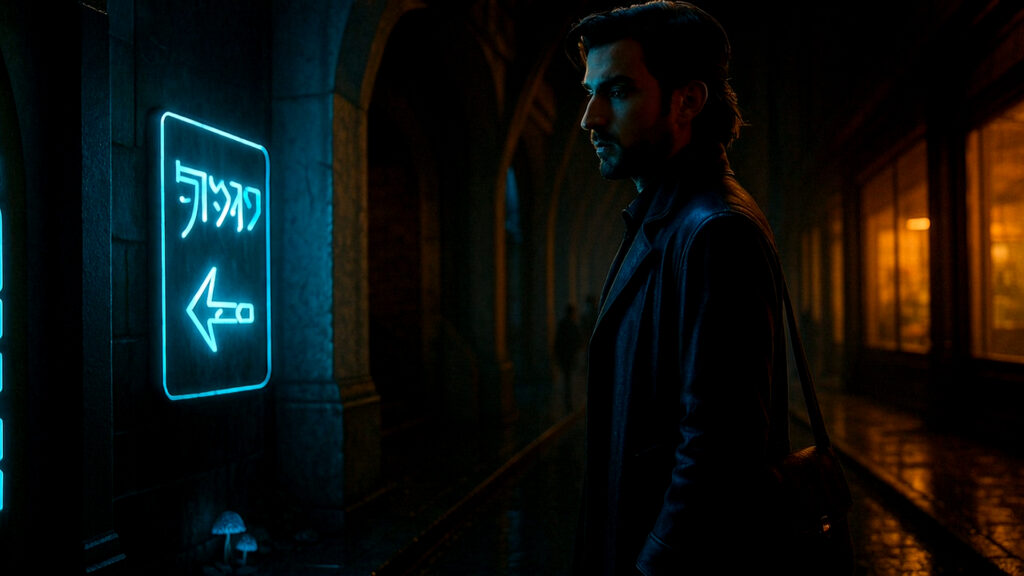
At the far end of the trellis, a door yawns in hexagon. It smells of scheduled rain, the kind you can set your watch by. You step through into the night of a city you know in the daytime: phone store, bakery, dentist, pawn shop, but everything has been translated into its Plato. Signs write themselves in letters that remember what it was to be lightning. Your shadow index fingers you down a side street where a river should not exist.
There it is anyway: a black mercury ribbon between buildings, untroubled by the idea of walls. Stars float on its surface like speechless coins, then swim away as if embarrassed to be obvious. The current negotiates with you because you have learned to be courteous. “Passage,” it says without words. “In exchange for a memory you won’t miss.” You search your pockets and your body, inventorying your past like luggage at a bus station. You offer the taste of winter. The river is satisfied. A silver fish, long as your arm, keeps pace with you across. It speaks in math about bridges that appear only once, under the feet of single beings who only later notice there was nowhere else to step. You promise to remember its face, and forget it immediately. That’s how the contract keeps clean.
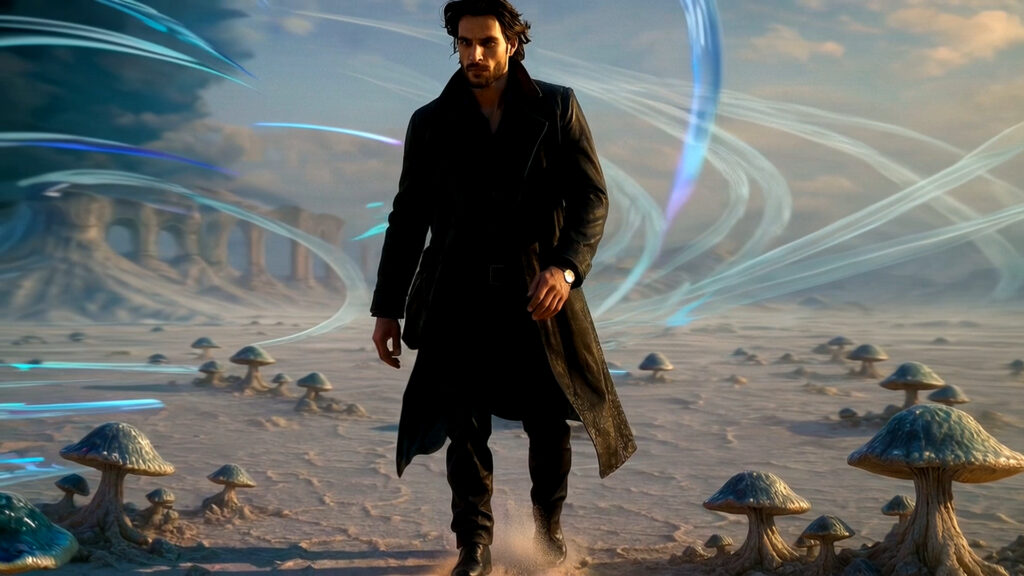
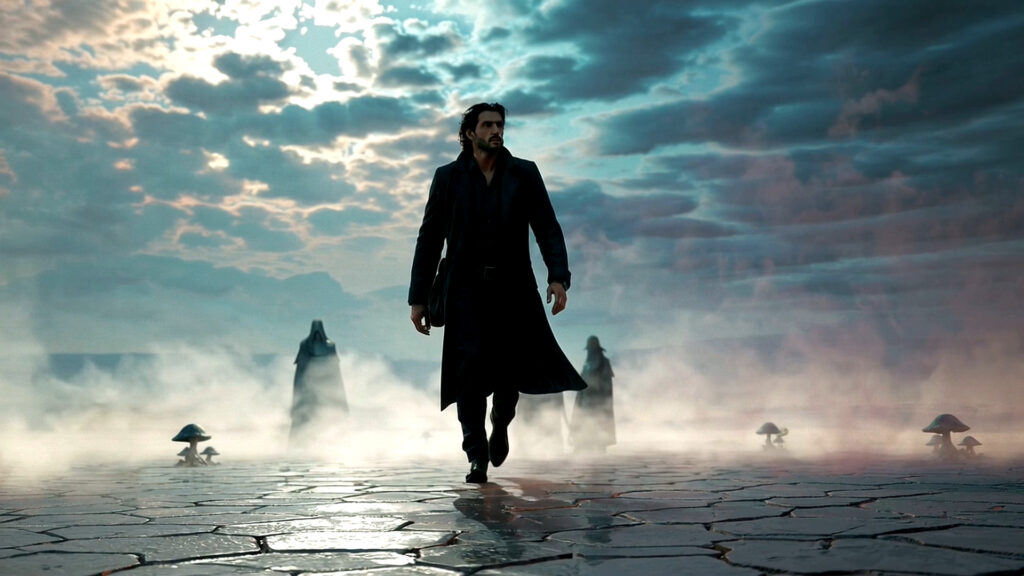
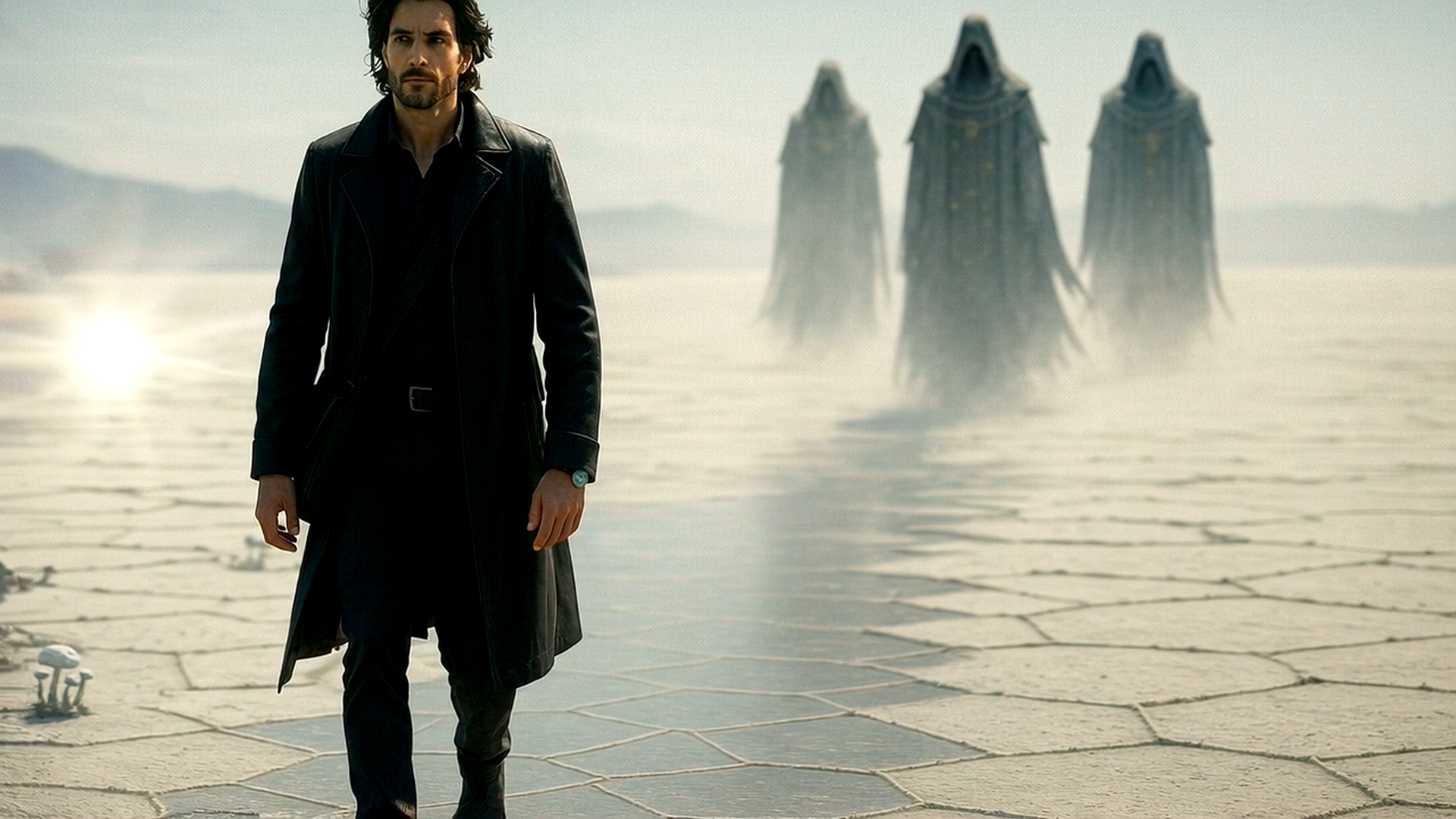
On the far bank, the city bones out into arches, white as the inside of a long-loved shell. Infrastructure hums. You feel it in your molars. The egg in your pocket grows heavier. That’s how you know you’re rehearsing the shape of the key you’ll have to be at the door that wants you. The street widens into a salt steppe where streetlights have the good sense not to stand. Sky and ground mirror, but the steppe refuses to reflect the sky. Your footprints plant little mushrooms. They bloom fast, faster, caps opening glossy with aurora oil. Each one whispers gossip from ten minutes ahead: a warning to duck, a suggestion to smile, a hint about a wall pretending to be road. You take the advice and try not to fall in love with your own competence.
The air prickles in a way that makes your molars reconsider their plans. Peyote constellations wink through a low ceiling of cloud, a star map of rules that call themselves ancient because that keeps worship tidy. Your shadow detaches like a dog on an impossible errand, returns breathing hard, and leans into your ear. “Last mile’s guarded by what used to be law.”
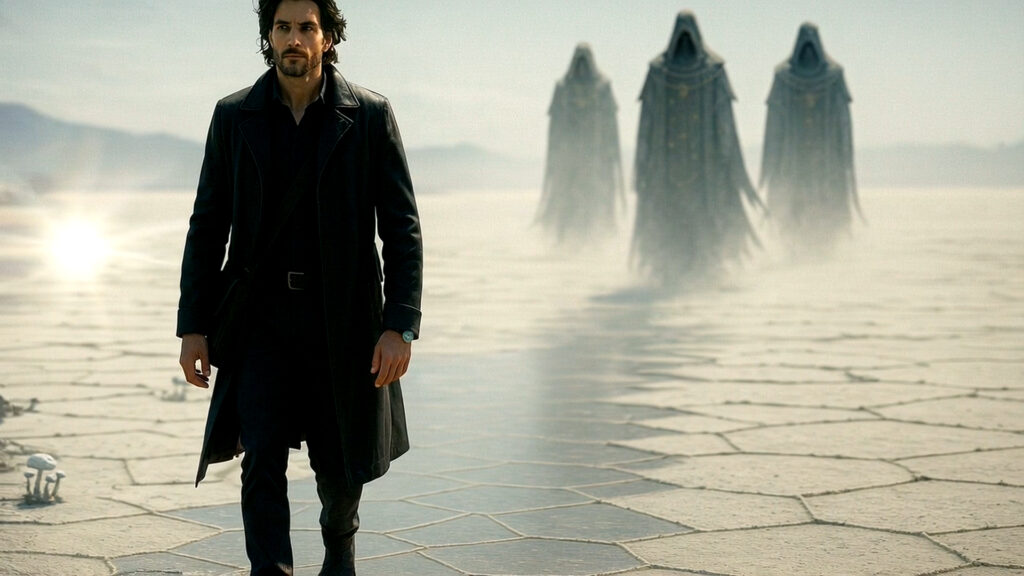
You walk anyway. The steppe kneels down into something like a courthouse that forgot where it was built. Cold comes that has nothing to do with weather. Figures drift forward, cloaked in rules they wear like bedtime stories. Their faces refuse to stay the same shape for more than a breath. They ask for papers nobody can own: a notarized permission slip signed by the person you might have been, a receipt for every time you were forgiven. When you don’t move to reach for pockets, the oldest of them nods as if you’ve earned a point. You do not have what they want. You have something else.
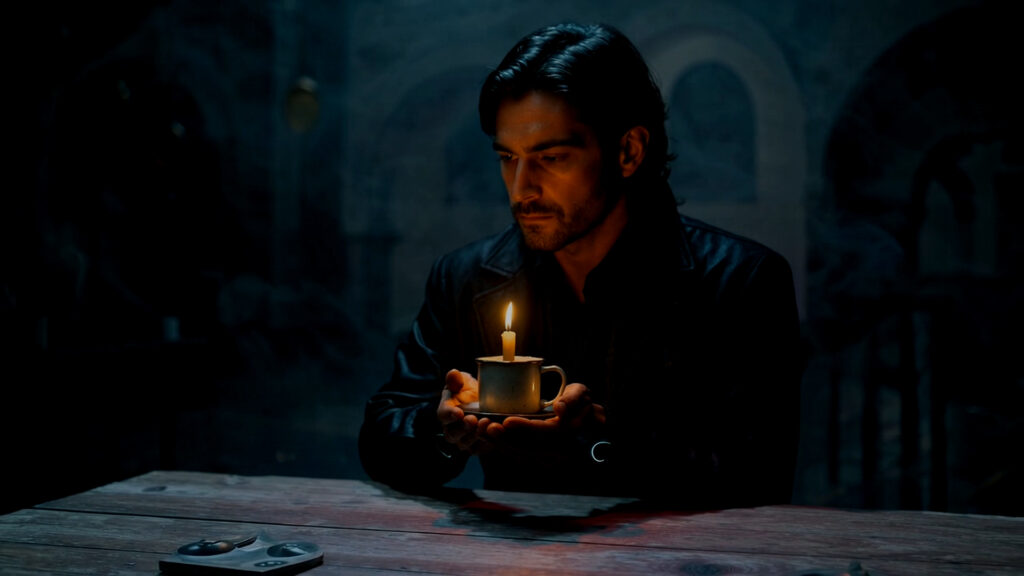
You clear your throat and offer them a story. Not the one about learning to step sideways through the day. Not the one about the shiver in your hand that finds doors like a dowser finds water. You offer a smaller story: a winter afternoon when the heat died and you taught yourself a trick to make tea with a candle, patience, and a brassy little optimism you had not realized was still hireable. You tell them everything about it that matters—the smell of the wick, the tiny strength of steam, the first sip—and nothing about how lonely you were because that part is yours. They drink it. Kind appears and then cruelty right behind it, then kindness again, different now, as if a new species. The egg in your pocket pulses once, twice, and you feel the corridor tilt inside your own body.
You remember what the ketamine taught you: problems have sides nobody bothered to name when maps were being made. You don’t blink. You step at a slight angle to where you’re standing, the way you might step out of a mirror without smudging the glass. Your coat snags on a rule you cannot read. You leave a thread behind. The oldest figure lifts a hand that is not a hand and lets you pass because it prefers a good story to a sovereign victory.
Color detonates so gently you laugh. The steppe brightens into a meadow of stone where buildings lean forward like curious relatives. The city raises its face to listen. You have reached the chest of the world, and unlike any chest you have loved before, it is willing to open without breaking. The gate is a circle you can only see if you look at it from the corner of your eye—otherwise it is just a perfectly ordinary patch of air. Mushrooms lift their lamps, bioluminescent candelabras in a choir posture. The network beneath the soil wakes like an orchestra tuning. Somewhere a wind chooses a key. You keep your hands steady.
When you take out the egg, your ring tightens like a wedding you didn’t know you had agreed to. The egg has learned your skin and is a little sorry to go. “Me too,” you say. You don’t crack it. You press it against the air where the circle is and let it decide how to stop being itself. It dissolves like sugar in tea, then reappears as a doorway the city pretends surprised to see. On the other side is not heaven, and not the future. It is a better habit. A version of this same street where shopkeepers remember the names of plants and carry bandages beneath their registers. Where dogs do not need leashes because they keep their own promises. Where the child who will be night-shift-you in a decade has one more adult in their corner who does not leave.
You stand there and think of all the clever words that could live in your mouth if you were a different kind of mage. None of them show up. What you say is plain and right enough: “Go on, then.” The city does not step through because cities who are worth saving have their own feet. It leans, and something on this side leans back, and the whole structure of tonight shudders, making room. The gate sighs. Reality and fantasy exchange a handshake that is not exactly friendly and not unfriendly either. Sci-fi machinery accepts flowers into its gears and does not choke.
You do not get a parade. You get the smell of bread deciding to be bread. You get the slow unthreading of a headache you didn’t know you had carried for three years. You get a wind that knows your name. You step backward carefully, the way you leave a sleeping animal alone when it is dreaming something that will make waking kinder. The mushrooms dim. The arches soften their hum. Your ring loosens. The circle becomes air that is only air. For a second you think you have tricked fate into being generous. Then you realize you negotiated.
The walk back is the easiest part because the world has remembered how to greet itself. The courthouse collapses into a rumor that nobody repeats. The salt steppe gives up its mirage and lets the boulevard be a boulevard again. Your shadow stitches back to your heel with an embarrassed cough. The arches smooth into a bridge you could swear was always there. The river looks almost like a canal, almost like something that belongs in a city not very different from yours. You toss in a coin that is not a coin. The silver fish surfaces long enough to be noticed and then chooses anonymity. You are glad for it.
The garden of glass is quieter now. The insects have flown into whatever makes morning, practicing the shapes their wings will need for the day shift. You let the silence braid into your hair. You do not pick a bell to take home. You will remember this place best by not owning a piece of it. The market of reflections is mostly closed. The woman with the optic-fiber eyes nods once from inside a mirror where she is not entirely human and entirely kind. You mouth thank you. She mouths you’re welcome, and her reflection puts a hand over your heart where nobody else can see.
Back down the impossible corridor, past the clock that knew the truth even when you didn’t. The door not shaped like a door blinks. You turn the knob the usual way because the best tricks are the ones that work in public. The room that isn’t a room is gone; a janitor’s closet stands in its place, brooms leaning against a wall that remembers a different humidity. You stand very still in the old air. Your phone lights up with ordinary messages: a bill due, a friend sending a photograph of a cat, a spam caller begging for a yes. You look at your wrist. The ring has faded to a paling. If you squint, it is there. If you blink, it isn’t. That is as it should be.
You walk home by streets that have learned a slightly different pronunciation. The same people are on corners where people always stand, but they are not the same. A man arguing with himself does so more gently. A woman feeding pigeons uses both hands like a benediction. A child whips past on a scooter, hair wild, and the city makes a little space so she will not fall. You could cry about it, but you will save crying for a day when your body insists.
Your building is exactly as undecorated as it was this afternoon. Your lock turns without drama. Inside, everything is almost as messy as you remember, but your coat slides from your shoulders and lands on a hook even though you do not own a hook there. A cup sits on the counter, dry and clean, waiting. You think of tea by candlelight, and the stove clicks, modestly helpful.
You wait for a knock that doesn’t come. Your work is quiet on both ends. You sit at the table and take the egg out of your pocket out of habit, and then laugh, because it is gone and you are still carrying it. You put your hand on your chest and feel a gate sighing somewhere very far away and very close, and a street lifting its face to listen. “All right,” you tell the room, which is now a room and always was. “We did a good job.”
It does not answer, because the world seldom does in words. It answers in proofs. Bread smell from somewhere up the block. Distant siren that never meets an accident. A wind that looks at your window and decides, this once, to behave like a lullaby. The city shivers, realigns, and discovers it can stand a fraction straighter without any one thing having to break.
You wash your hands. Spores swirl down the drain like a weather map you will dream about in a gentle, disordered way. You go to the mirror above the sink and press two fingers to your wrist where the ring is and isn’t. You do not look for doors. Doors will look for you. They always have.
You sleep the sleep of someone who knows how to step through the day at a gentle diagonal. The night does not keep score. It keeps stories. In one of them, a fish the size of your arm says your name with perfect pronunciation. In another, a woman who only exists in glass learns to blink and does not hate what she sees. In all of them, you keep the promise you made: that when the spiral appears on your phone, you will say yes first and invent your brilliant reasons later.
The city dreams, too. It dreams of itself with better manners. It dreams of gates that open without bruising. It dreams of streets that remember the child on the scooter and the woman with both hands and the man learning to be kind to himself because the air reminded him. The city wakes with a start and finds it has learned a new balance, the way a person discovers one day that stairs tire the legs less now than they did a year ago.
Morning will be ordinary and that is the miracle. You will have coffee you do not spill. The elevator will arrive on time once. You will cross the lobby and the doorman will say, “New coat?” and you will touch the lining and say, “Same coat, better fit.” The world will pretend it heard nothing, because the world is shy about gratitude. That is fine. You learned a long time ago to barter with silence.
Ketamine Riftwalker is the name they gave you because they needed a story to explain why, sometimes, the city feels like it just remembered how to breathe. You wear the name lightly. Names are also doors, and you have work tonight. Somewhere, the hinge is waiting, where two reflections disagree. Somewhere a seam holds still, pretending. You finish your coffee, pocket your phone, and go to see what will open when you reach it.
the Gallery